In my latest efforts to watch at least one science fiction or horror movie a week, I picked out The New Daughter with Kevin Costner and Intruders with Clive Owen. I enjoyed both horror films and would have given both higher scores than their average 5’s in IMDB (I’m an easy scare!). Both Costner and Owen did a fine job, and I can see why each would want to play their sympathetic leading roles. But it got me thinking about celebrities in horror movies. I couldn’t lose myself in the story with such familiar faces on the screen. Should celebrities ever star in horror movies?

The producer side of me wants the celebrity. It would be such an easier sell to investors and audience. People might see your film just because Kevin Costner is in it. Or investors will fund you just because you got Clive Owen so you’re obviously serious about getting the film done.

But the creative side of me wants the unfamiliar face to go with the unfamiliar story. How creepy can it get when Dances With Wolves is in the house? As Costner unravels the mystery of what is happening to his daughter, I find myself rooting for him to use his military training from No Way Out!

Sometimes it works to have a celebrity decoy – I loved seeing Samuel L. Jackson die prematurely in Deep Blue Sea, mid-monologue no less.

But mostly it’s distracting – I would have loved War of the Worlds so much more if Tom Cruise were just Tom Doe. Of course, nobody would bankroll a $MM film with Tom DoeL

So what’s the best compromise? The New Daughter and Intruders got close, putting these charismatic stars in subdued parts. These movies also came out in 2009 and 2011 respectively, so well after the peak of either celebrity. Toning down the flash definitely helps.

A sad ending helps too. I won’t spoil it but sometimes the celebrity doesn’t save the day.

Finally, a supporting cast that I at least didn’t recognize helps to counter-balance the familiarity of the star.

What’s your preference on celebrity in horror movies? Can you get into the story with a marquee name in the lead?
I attended the 5th Annual Film Finance Forum East today, presented by Winston Baker with Variety magazine and chock full of key players in film production, distribution, sales and financing. There was so much information, and I highly recommend catching an upcoming conference like this if you can. It was encouraging to hear the different ways movies are getting produced and funded. It was also daunting to hear how much there is to learn! There was 10 hours of substantive information and networking so too much to summarize, but here are some Tweetable quotes and highlights:


Brian de Cenzo, VP at Goldman, Sachs & Co and James Moore, CEO of Vine Alternative Investments shared an overview of the film business as an asset class:

  • Brian – how do you get people to show up for stationery content in a non-stationery world? (on the challenge of theatrical releases in a world of downloadable content)
  • Brian – there is a permanent structural shift from buying to renting content
  • Brian – money is moving to licensing content which means more options for consumers J but lots of it is going to original programming, not moviesL
  • Brian – industry dynamics should cause introspection, especially in light of increasing production costs
  • Brian – getting the word out has never been less expensive
  • Brian – audiences continue to show that if you give them a reason, they will come
  • James – the benefits of film as an asset class: cash flow, low correlation, large opportunity
  • James – lower volatility can generate higher compound returns over time


Eileen Burke, Founder of West End Capital and Advisory, James Janowitz, Partner at Pryor Cashman, Andy Kim, CFO of The Weinstein Company, and Stephen Stites, VP of Goldman, Sachs & Co talked about hybrid companies (companies who started with one service and now are offering multiple, such as producing AND distributing):

  • Eileen – everyone looks at the same data, but there are so many different business models
  • Andy – The Weinstein Company has moved into TV development and is looking to grow this area
  • Jim – slate deals do much better with active management
  • Jim – you really need to monetize with a bigger company/ studio release (though he did acknowledge some self-releases go viral)


Margaret Chu, founder of Tangram Advisors, Terrence Dugan, partner at Morgan, Lewis & Bockius, Michael Katzenstein, senior managing director of FTI Consulting, and Peter Ma, Associate at Colbeck Capital Management talked about distressed investing (referring to either financial or operational distress):

  • Margaret – tentpole films have larger share and are driving box office
  • Margaret – opening weekend is an increasing % of total box office. The theatrical windo is shrinking
  • Mike – there is an adverse impact in physical dollars being replaced by digital dimes
  • Mike – the film business is not an investment space for interlopers; it is incredibly personal, relationship-driven
  • Peter – we are not investing in individuals, not one product, not just one guy; there’s a management team, a series of contracts
  • Mike – growth is almost all digital, all mobile; folks will sacrifice quality of experience to watch content that their device happens to give them
  • Terry – passion cuases people to hold on till it’s too late
  • Peter – for the investor, take the time to understand film accounting


Vicki Cherkas of Cherkas Strategic Consulting, Jonathan Deckter, President – International Sales and Distribution  of IM Global, William French, President of Film Production Capital, Dominic Ianno, CEO of Indomitable Entertainment, Celine Rattray, Partner of Maven Pictures, Dan Steinman, Agent – Film Finance Group at CAA, and Christopher Woodrow, Chairman and CEO of Worldview Entertainment talked about single-picture financing:

  • Celine – developing a film is tough; the bar is higher
  • Celine – anything you take on for development needs to be easy to be made
  • Dominic – if you invest in 10 films, you’ll get 1 hit, 2 break-even, and 7 will lose
  • William – some films sell of international rights to pay for production and keep domestic as the upside
  • Dan – if a film is using an unknown foreign sales company, it means better known companies probably passed
  • Celine – on casting the lead actors: it’s so easy to make the wrong call
  • Dominic – the movie starts to get made the moment you get a star
  • Jonathan – under $10MM, studios won’t get involved early; for $20MM+, you want US distribution on board before production
  • Dominic – production costs are higher, distribution costs are higher, there are 10 new releases each weekend
  • Celine – steps to making a film: set script, director and casting; get foreign estimates (multiple bids); decide where to shoot, looking at tax rebates; look at domestic value as 10-20% of total film budget; given the budget, figure out how to produce at this amount; get a financing plan (sales advances, loans, equity), then raise the rest of the dollars needed
  • Celine – foreign sales forecasts are typically accurate; domestic is much harder to estimate


John Hadity, EVP at Entertainment Partners, Aaron Gilbert, MD at Media House Capital, Keith Kjarval, Founder of United Pictures, John Logigian of consulting firm The Logigian Company, Lucy Mulloy, writer, director and producer of Mulloy Productions, and Donna Smith, President of Persnickety Productions talked about how to capitalize on the independent film business:

  • Aaron – festival costs of promoting the film are covered by domestic agents
  • John L. – surround yourself with people who know the business, work with quality people
  • John L. – how to succeed in indie films? Be practical, nimble and tough at times
  • Keith – wrangling always falls on the producer; you have the relationships with investors and the filmmakers
  • John L. – the producer must sell – tell the story, share the vision
  • Keith – as a producer, your job is to network – make it your business to know who people are
  • Aaron – as producers, our job is to find the commercially viable project
  • Aaron – the producer’s job is to educate the investor
  • John H. – fundraising is so hard, sometimes people are afraid to say No to a potential investor
  • Keith – post-production budget has to fit with pre-production raise
  • Donna – we’re all very fortunate to work in the movie business


We are all fortunate to work in the film business. Amen to Donna’s closing words.

The Battle Below follows Derek, now a college professor, coming back to his old neighborhood. The projects are giving way to Whole Foods, the rents are insane and kids are fighting in dungeons with swords and axes for money, because there are no jobs.

Written and directed by Bruce Faulk. Produced by Caroline Ceniza-Levine and Bruce Faulk. This episode features Anton Briones, Jimmy Burke, Jasmine Carmichael, Jamahl Garrison-Lowe, Benton Greene, Carl Ka-Ho Li, Leo Kubota, Jennifer Loring, and Tania Verafield.

Did you miss an episode? Catch them all here – https://fbcfilms.com/the-battle-below/

Perhaps FBC Films is named for Bruce’s Fat Black Cat, Eba. But she’s also a Foxy Black Cat:

I had the privilege of attending a Power Talk at the Barnard Athena Center between Barnard President Debora Spar and President of HBO Documentary Films, Sheila Nevins. Nevins’ projects have won 24 primetime Emmy Awards, 28 news and documentary Emmy Awards, 23 Academy Awards, and 35 George Foster Peabody Awards, including a personal Peabody in 1999. The candid and spirited discussion covered diverse topics including the film industry in general, the state of women in filmmaking, management and career advice and work/life balance issues. Here are five of my favorite takeaways:

  • Great careers can be stumbled upon opportunistically.

Nevins shared that her first TV job was intended to be research, except that she saw the call for auditions, attended that instead and founder herself with a role that last three years. Since she already knew people in TV, she used that network to get to HBO where she stayed for 30 years

  • You don’t know if a film will be good but you do know if you should pursue it.

Nevins focuses on whether the decision to green-light a movie is sound, recognizing that the movie itself after it comes out may or may not do well. Besides, the metric for whether a movie is a success can change. (Critical acclaim? Audience? Profits?) In deciding to pursue films, Nevins looks for a story with lasting interest since it takes 18 months before the film debuts

  • Dream big, but follow what’s possible

I found Nevins’ remarks around the topic of succeeding in the film world frighteningly candid. She talked about “self-limiting” herself and credited it with her survival in the business. For example, she worked on documentaries when she wanted to do fiction, and she said she didn’t want to run a company when she in fact did. “I wasn’t going to step over the line for any passion,” Nevins said at one point when she talked about focusing on keeping her job and salary over creative pursuits.

  • “I long for an off/on switch, but they don’t make it anymore”

Nevins talked about how the work hours are relentless. She referred to it as having no schedule because you are on 24/7.

  • “‘Every day is a challenge, and I’m always nervous”

When asked for a time when she overcame a career challenge, Nevins declined to answer that question, saying that it implied a linearity that isn’t there – i.e., one challenge, then rest, another challenge, then rest. Instead, she talked about constantly trying to improve and not resting on her laurels. “I’m old,” Nevins confessed, “but so what? I’m good.”

The Battle Below follows Derek, now a college professor, coming back to his old neighborhood. The projects are giving way to Whole Foods, the rents are insane and kids are fighting in dungeons with swords and axes for money, because there are no jobs.

Written and directed by Bruce Faulk. Produced by Caroline Ceniza-Levine and Bruce Faulk. This episode features Anton Briones, Jimmy Burke, Jasmine Carmichael, Bruce Faulk, Leo Kubota, Jennifer Loring, Jamahl Garrison-Lowe, Benton Greene, Carl Ka-Ho Li, and Tania Verafield.

Did you miss an episode? Catch them all here – https://fbcfilms.com/the-battle-below/

The Battle Below follows Derek, now a college professor, coming back to his old neighborhood. The projects are giving way to Whole Foods, the rents are insane and kids are fighting in dungeons with swords and axes for money, because there are no jobs.

Written and directed by Bruce Faulk. Produced by Caroline Ceniza-Levine and Bruce Faulk. This episode features Jasmine Carmichael, Bruce Faulk, Jamahl Garrison-Lowe, Benton Greene, Carl Ka-Ho Li, and Tania Verafield.

Did you miss an episode? Watch Episode 2 of The Battle Below and Episode 1 of The Battle Below.


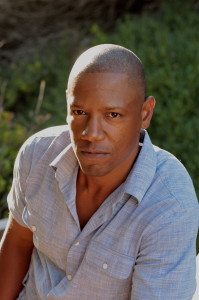
Tory Kittles is an American actor, writer and producer. He’s appeared in films such as Get Rich Or Die Trying, Next, Miracle at STory Kittles photot. Anna and Lifetime’s Steel Magnolias for which he is currently nominated for an NAACP award for his performance as Jackson. Kittles also had a stint on the hit series Sons of Anarchy as the character Laroy and has appeared on stage in NY, LA and Atlanta in several productions, most recently in Guess Who’s Coming To Dinner, with Tony Award winner Phylicia Rashad, directed by Broadway’s Kenny Leon. Kittles can be seen in The Weinstein Co’s The Sapphires (Cannes 2012) and Antoine Fuqua’s Olympus Has Fallen this coming March.
I met Tory “virtually” on Twitter when I posted about how much I enjoyed the creature feature, Frankenfish, and Kittles’ turn as the lead and hero. It’s not often you see an African-American actor playing a lead role that could be a character of any ethnicity, and Kittles carried that movie. So I was ecstatic when Tory agreed to share his insights with FBC Films:

You were a lover of movies since childhood. What is it about acting that made you make your career here?

Yes I fell in love with the movies at a young age, though I didn’t put too much thought into it becoming my career early on. I was in college at the time, and I kept changing my major, because I wasn’t sure about any of the things I was studying. Then one day, while looking for a job, I noticed an add that said, “actors, models, extras” and gave a call to the number. Shortly after, I found myself on the set of the Keenan and Kel show as an extra, and something in me clicked, and I just knew.

What are you currently working on?

I have a few things that I’m working on currently, but I can be seen this upcoming March 22nd in the Internationally acclaimed hit The Sapphires and also in Antoine Fuqua’s action thriller Olympus Has Fallen which hits theaters in March as well.

You also composed a song for Tigerland, an early movie of yours. Are you still active in music? Any interest in other arts or in going behind the camera?

I did compose a song for Tigerland, yes, that was also my first film. I’ve always been a writer, still am, I have a few writing projects that I’m working on now.

As an actor, how do you decide what projects to take?

I think in terms of choosing something, it always begins with the script, but even if it’s a great script, sometimes I have to discern whether or not it’s for me. I think that’s been part of my maturation process…When you first start out, you want and think that you can do everything, but the more you learn about yourself, the more specific you become, so the more specific your choices do also.

I loved you in Frankenfish. How did that come about? Do you have an affinity for sci fi/ horror specifically?

Thank you. Wow. That was ages ago. At the time it was called The Bayou, and I went in to audition and they hired me. It was simple really. Though I wish they would’ve told me that they planned to change the title. Ha. As far as having an affinity for Sci-Fi…I enjoy it, but I have an appreciation for all genres of film, so I don’t try to get locked into one area…I like to do the things that I like to see.

How has the industry changed over the years?  Are you seeing diversity casting improve over time?

I think the industry is constantly changing — it’s become more interactive,for instance, ten years ago you wouldn’t have been able to connect with me for this interview as easily as we have. Twitter has opened all avenues, and as far as diversity, yeah, sure, I think it’s becoming more so.

What advice would you give an aspiring actor?  What do you know now that you wished you knew when you started?

Hmm….Joel Schumacher once told me to “trust your own instincts”. I think that’s the best advice anyone can give.

What I wish I knew then…..there are no do overs. Make the moments count.

Tell us something fun about Tory that’s not obvious from your resume!

Ha. If it’s not on the resume….yeah…there’s a reason for that!

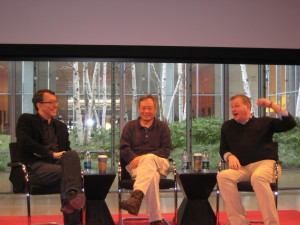
I had the amazing privilege of attending a talk with director Ang Lee, screenwriter David Magee and TV critic Mike Hale at The Times Center. Of course, there were candid insights into Life of Pi, which Lee directed and Magee scripted. But I was particularly struck by how much Lee balanced talk about creative considerations with business objectives. Encouragingly, never did Lee imply that economic considerations hampered his creative vision. Art and business can co-exist. It is not an either/ or proposition.Times Center Ang Lee event 2013 01 29

  • Art can emerge from underneath the marketing

The talk opened with a trailer from Life of Pi set to the booming sounds of Coldplay’s Paradise. Lee candidly shared that he was embarrassed by this slick, bombastic showing. Yet, he didn’t mind it because he understood that you need to sell a movie so people see it so more movies can be made. Lee noted that the economics and the art of filmmaking work in parallel and you need both. The marketing may not appeal to your creative vision but the art can still come out.

  • Even an Academy-award winning director still needs to be business-savvy.

Lee talked about needing over a year to finalize budget, so pre-production was challenging. Production itself was equally challenging because of the expensive 3-D and CGI requirements which meant there was no cushion to make mistakes, and shooting had to be very economical. Lee shot in Taiwan for location reasons but also because it was cheaper than Los Angeles. Throughout the talk, Lee toggled in-between his creative challenges and the business challenges, clearly keenly aware and respectful of both.

  • Entertainment is becoming more global

Lee echoed comments from our earlier blogs with Jeff Geoffray of Blue Rider and Tom Vitale of SyFy and Chiller about the increasing importance of international viewers. Where Lee used to see North American distribution taking 50% of total, he now sees international distribution at a majority 60% or more depending on the movie. Life of Pi made 80% of its receipts abroad.

I’m excited about the focus on business considerations even by a creative giant like Ang Lee. For the creative reading this blog: Will this change what projects you decide to pursue? Will you focus your production time differently? Will you change your balance between creative and business pursuits?